Making art starts with making choices: subject, light, medium, tools… Photographing a city works the same way. Like a portrait, a photograph is more than a record of its subject: it is a decision about how to represent it at a particular moment. The photographer’s work lies in reading the subject and finding a way to render it.
Each city has its own history and its own story to tell. Berlin, New York, Paris or Rome are aesthetically distinct, yet they share a common foundation: they are built, shaped and inhabited by people. Their buildings and public spaces bear the traces of human ambition, labour and everyday life. A city is more than a collection of buildings, squares and parks; it is the material expression of the people who have lived and worked within it.
Glasgow is a city made of the many layers left by its people. One layer to peel could be the rise and decline of the industrial city. Another could be its social history, or its regeneration and the transformation of the Clyde. Glasgow’s architectural heritage offers another obvious starting point. The wealth generated by industrialisation in the nineteenth century left a remarkable legacy, much of it built in the city’s distinctive red sandstone.
This heritage, designed to reflect choices about how a city should function and how it should represent itself, gives plenty to photograph in daylight. Glasgow is also a living city, true to its motto Let Glasgow Flourish. Modern additions sit alongside historic buildings, while murals by local artists bring new life and colour to some façades. The city is continually changing, even as traces of its past remain visible.
A photograph can never tell the whole story of a place. Understanding its history helps the photographer decide what deserves to be brought into view, and what can remain outside the frame.
Glasgow’s George Square, for example, was laid out in 1781, during a period when the city’s expanding commercial wealth was helping to shape its civic identity. The square has since witnessed very different chapters in the city’s history, including the confrontation between striking workers, police and the army in 1919 known as the Battle of George Square.
Such histories may not be visible in a photograph, but they are a reminder that places deserve to be approached with humility and respect.
Only then comes the question of light. As a northern city, Glasgow benefits most of the year from a diffused light, particularly sympathetic to its architecture, revealing the colour and texture of the stone. In the summer, when the light is harsher, the blond and red sandstone come alive against the blue sky.
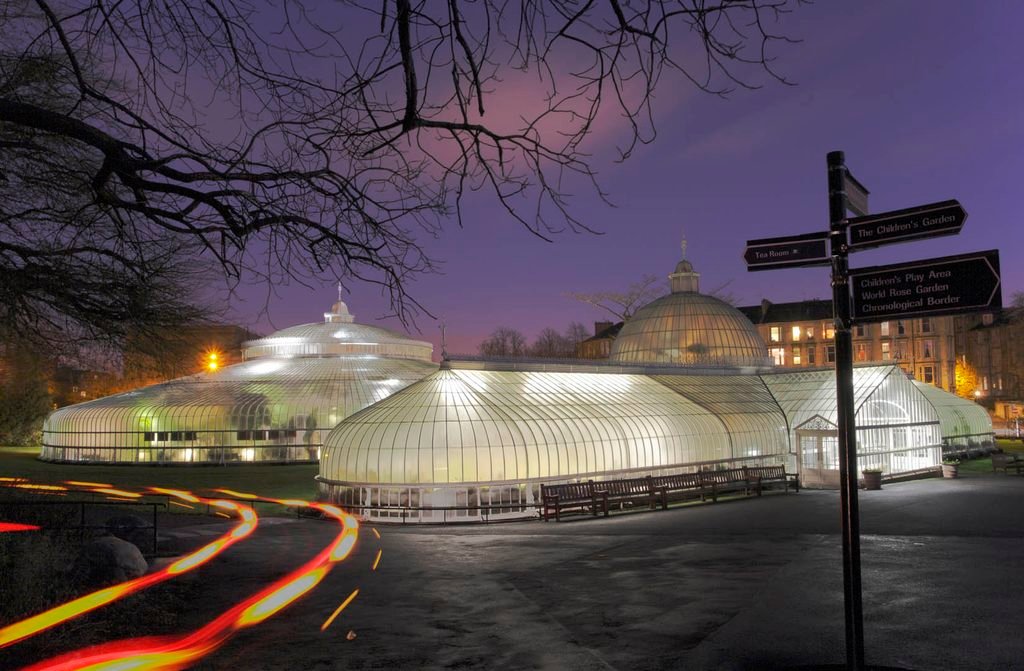
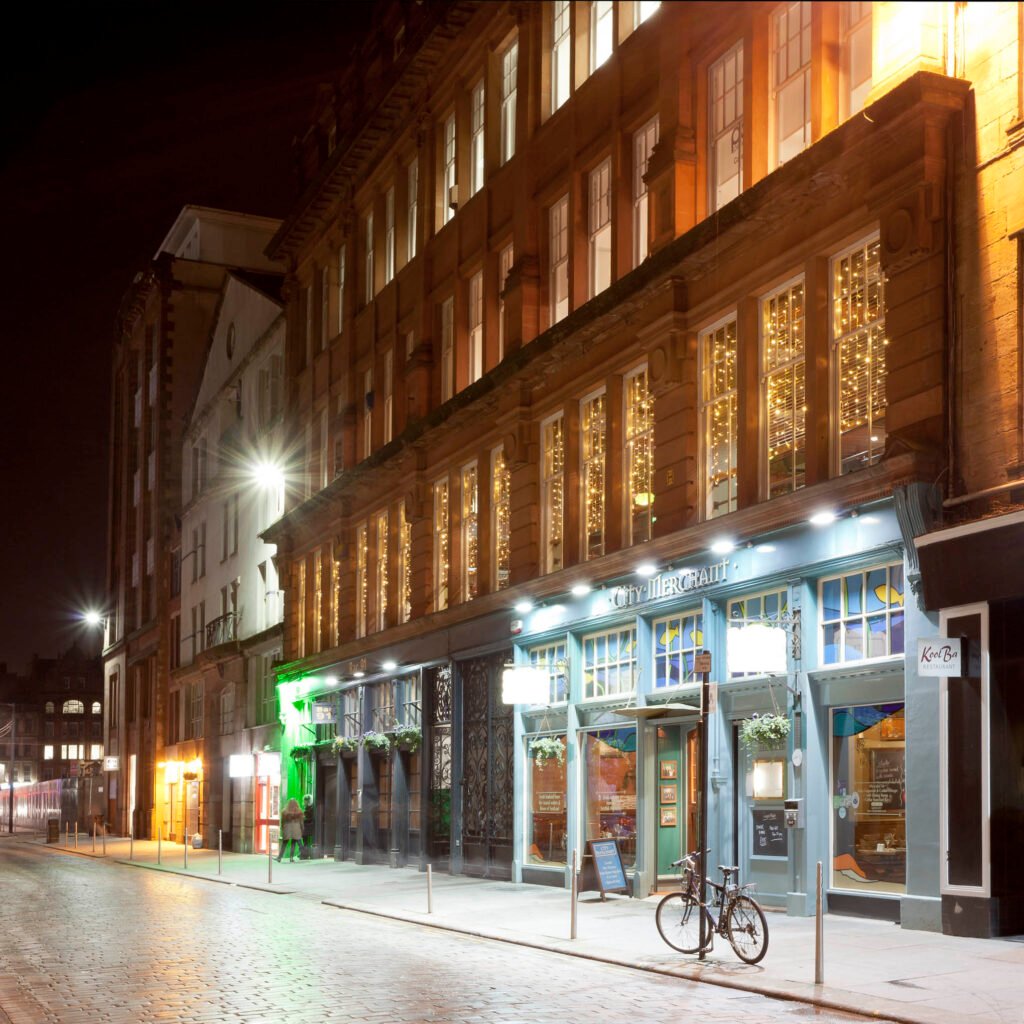
Yet I chose to photograph Glasgow at night, as part of my Visions series.
Night photography offers a different way of reading a city. As natural light fades and artificial light takes over, familiar relationships between buildings and public spaces begin to change. Streetlights, illuminated windows and architectural lighting draw attention to some elements while leaving others in shadow. The city emerges selectively from the darkness, shaped by the available light and the photographer’s choices.
It also comes with its own challenges.
Moonlight, when not overwhelmed by artificial lighting, can create a distinctive atmosphere, with subtle shadows and cool tones. Yet our eyes and a camera do not perceive light in the same way. In low-light conditions, human vision becomes relatively more sensitive to blue-green wavelengths, a phenomenon known as the Purkinje shift. A camera does not reproduce this change in perception in the same way, so the silvery, bluish quality of moonlight that we experience may not appear as expected in a photograph.
Painters can offer a different interpretation of nocturnal light, one that speaks more closely to how we might experience it. Paul Delvaux’s Siren in Full Moonlight is one example.
Photography, however, has its own means of interpretation. Toning, once used in black-and-white photography for practical as well as aesthetic reasons, can alter the atmosphere and perceived depth of an image. I remember a black-and-white photograph in which gold toning was used to reproduce the colour of tea in a glass.
Light is only one element of the mood of a city, influencing how a photographer approaches a place. Office workers leave, some morphing into party-goers. Council workers prepare the city for the following day. Beneath the veneer of quietness, activity continues; only its nature has changed. The people may no longer be visible, but the city remains shaped by their presence.
Night photography also changes the pace of working. It is a slow process, demanding a degree of preparation and care reminiscent of working with large-format cameras.
Modern cameras are more forgiving with high ISO settings, making handheld photographs possible in conditions that would once have been difficult with film. Yet the laws of physics remain, and working in low light often demands patience.
There is time to consider the scene, to examine the relationship between the available light and the architecture, and to decide what deserves prominence.
This slower process is part of the attraction. Unlike a fleeting moment in street photography, the photograph need not be a reaction to an unfolding event. It can emerge from sustained observation: looking at a façade, considering the lighting chosen for a public building, or noticing how an otherwise ordinary space changes when its surroundings recede into darkness. Knowledge of a place and its history can inform these decisions, even when that knowledge never becomes explicit in the final image.
A city at night can feel almost theatrical. Buildings are no longer revealed evenly, and a public space can acquire an entirely different character. Familiar architecture becomes something to discover rather than simply recognise.
This is particularly interesting in Glasgow, a city whose identity has long been connected with work, industry and the movement of people and goods. At night, attention shifts from what each building was built for to the relationships between light, architecture and space.
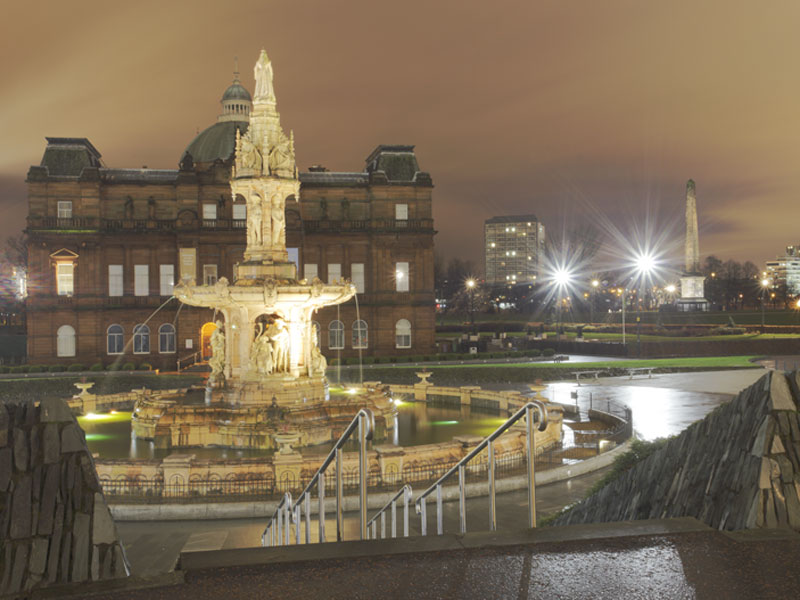
The People’s Palace is a good example. Built in the East End as a cultural and social centre for the people of Glasgow, it carries a particular history within the city. At night, however, the building can be encountered first as an architectural presence: illuminated against the darkness, separated from the visual noise of its surroundings.
Darkness does not simply conceal a city. It edits it.
As in black and white photography, it removes some information whilst giving prominence to other things: a façade, a window, a pool of light, a silhouette, a reflection. The city remains the same, but the way we see it changes.
And sometimes that is enough to make a familiar place worth looking at again.